
Endemic Cichlid as an Indicator Species: A Means to Protect the Rest of Biodiversity
Almost all endemic cichlid fish became critically endangered around 2010. Some of them (such as Paretroplus menarambo), presumed extinct in 2004 and rediscovered in 2008 in Lake Tseny, possess an overlooked historical distribution extending between the Sofia and Mahajamba river basins.
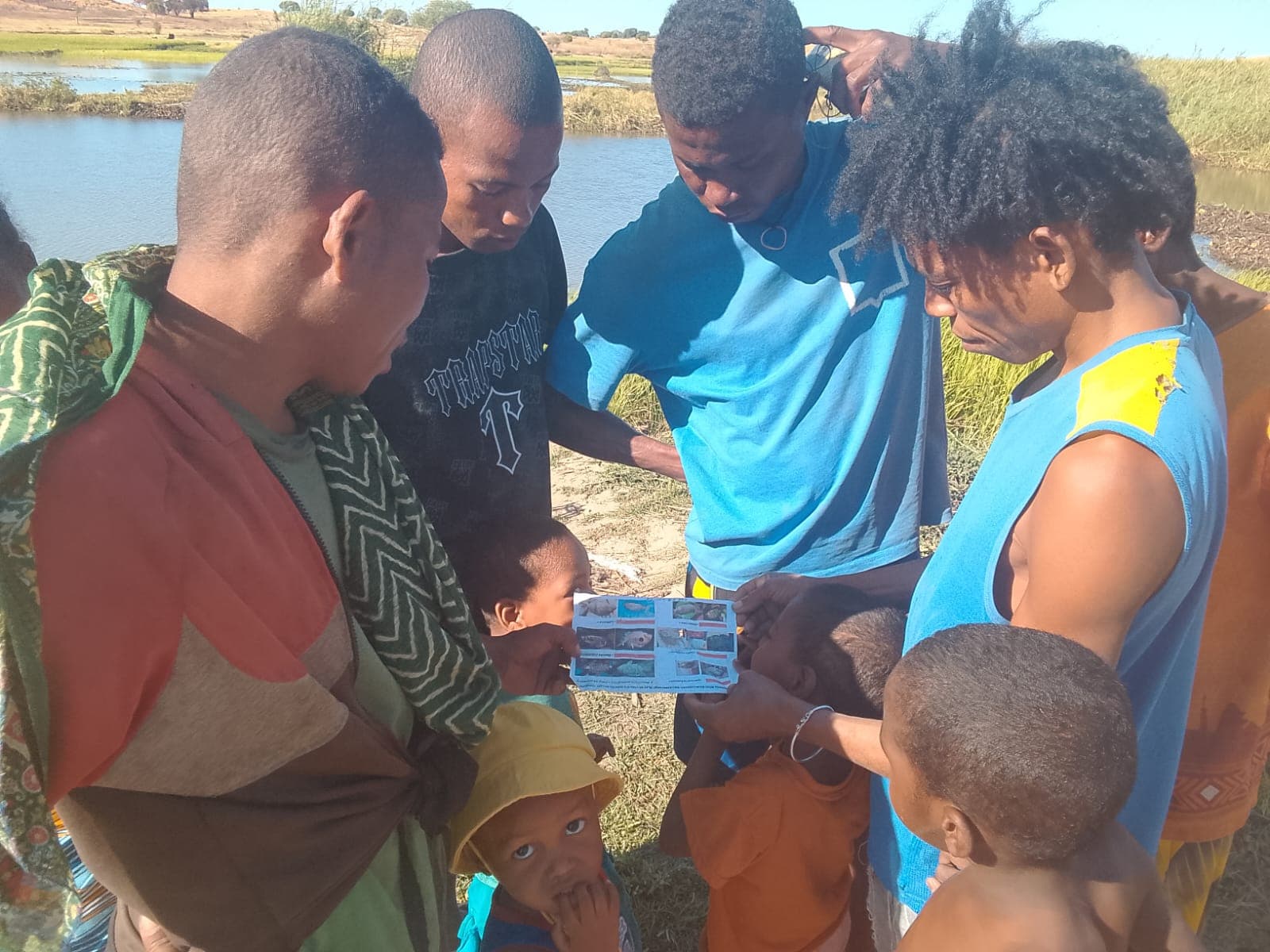
Faced with the growing threats of climate change and anthropogenic disturbances, identifying their persistence areas is crucial. Consequently, an investigation of two genera of cichlids (Paretroplus and Paratilapia) was conducted by the RÔGO Madagasikara team in July 2026 across three lacustrine complexes (Lake Mandrovitra, Lake Ambodimanary, Lake Ankarangy) in four surrounding villages: Ambodisakoana Atsimo, Andilabo, Ambodisatrana Avaratra, and Andranomena, located in Mampikony II Commune, Mampikony District.
The main objective is to identify the locations where these rare fish are found and to help designate priority sites for protection and conservation.
As a result, forty-six (46) local fishermen and households shared their knowledge of the species based on one hundred (100) photographic illustrations (flyers) distributed. Among those surveyed, people over 40 years old were the ones who best recognized the presence of these local fish. Overall, 11.5% of respondents noted that the last habitat of the species was in Lake Mandrovitra, and five (5) fishermen revealed they had captured seven individuals in December 2025.
This discovery prompted a lasting collaboration with the local fishermen's cooperative, actively maintained to confirm the continuous presence of the species and to allow the RÔGO team to indicate the presence or absence of these genera in the water bodies.
To consolidate these data, an analysis using environmental DNA (eDNA) methodology and a scientific fishing session in Lake Mandrovitra are scheduled soon to confirm and assess the size and distribution of these populations, validate the management strategy, and guide community conservation initiatives.
This activity was made possible thanks to collective efforts by local communities, village chiefs, the RÔGO Madagasikara team, and the fishing cooperatives around Lake Mandrovitra.